Rehasense PAWS Manual vs Automatic Clamping: What's the Difference?
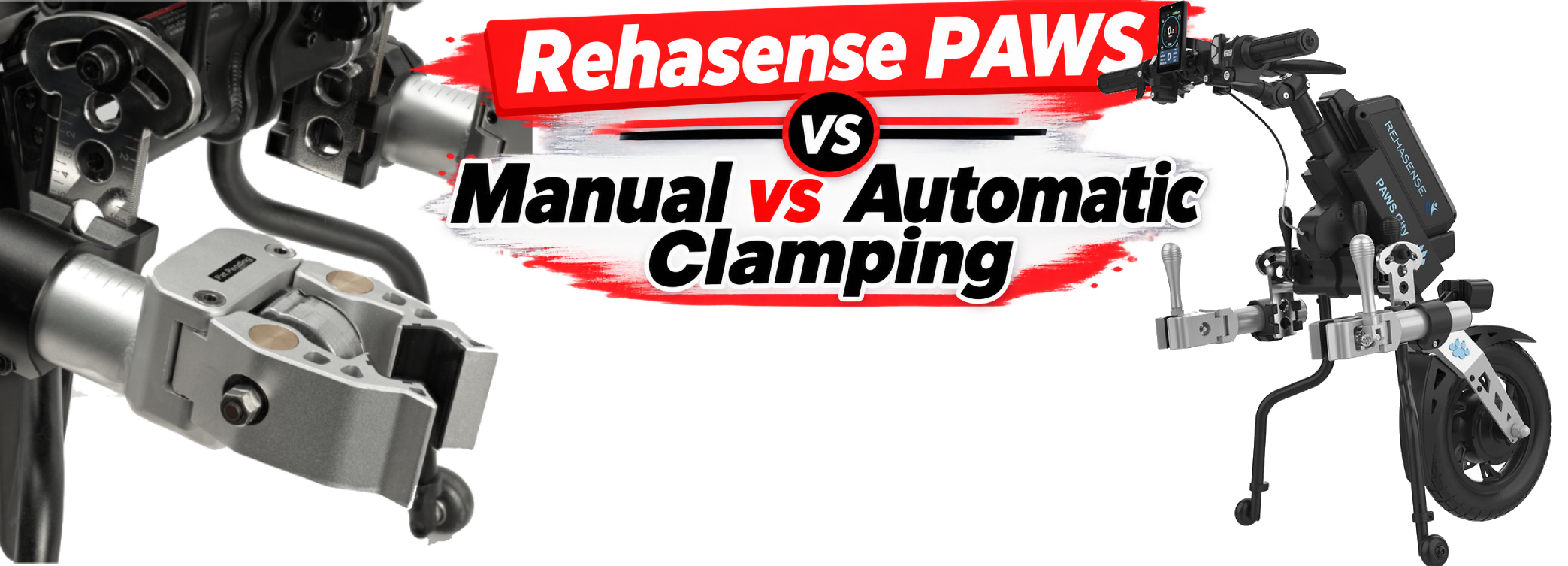
Rehasense PAWS Manual vs Automatic Clamping Explained
Rehasense offers manual and automatic clamping options. Both are designed to secure the wheelchair to the PAWS attachment, but they operate differently.
The manual system uses physical clamp levers. The automatic version uses electrically operated clamps controlled from the handlebar.
There is also an important distinction between clamping and lifting. These functions can be configured separately, so automatic clamping does not always mean automatic lifting.
This guide explains how both systems work, their practical differences and what to consider before choosing a configuration.
Want to Try These Products for Yourself?
See how these wheelchair power attachments work for you. Visit our next Roadshow or arrange a personal demonstration.
Try These Products at Our Next Roadshow
Meet the team, explore the products and try them in person at our next Wheelchair Roadshow UK event.
Next Roadshow: 10 April (date to be confirmed)
Register for the Roadshow →Prefer to Try One Now?
Arrange a free home, showroom or online demonstration with Invictus Active at a time that suits you.
No need to wait for the next Roadshow.
Book Your Free Demo →What Is the Clamping System on a Rehasense PAWS?
The clamping system connects a manual wheelchair to the front-mounted Rehasense PAWS power unit.
Once connected, the PAWS attachment provides powered assistance through its front drive wheel, changing the manual wheelchair into a powered three-wheel configuration.
The clamps secure the wheelchair using its front frame tubes. Their position and adjustment are important because the connection must be correctly fitted to the wheelchair.
Rehasense provides two main clamping options:
⇒ Manual clamping: The user closes the clamp jaws using physical levers.
⇒ Automatic clamping: Electrically operated clamps close and release through handlebar-mounted controls.
The two systems perform the same basic docking function. The main difference is how the user operates them.
Rehasense PAWS Manual Clamping: How Does It Work?
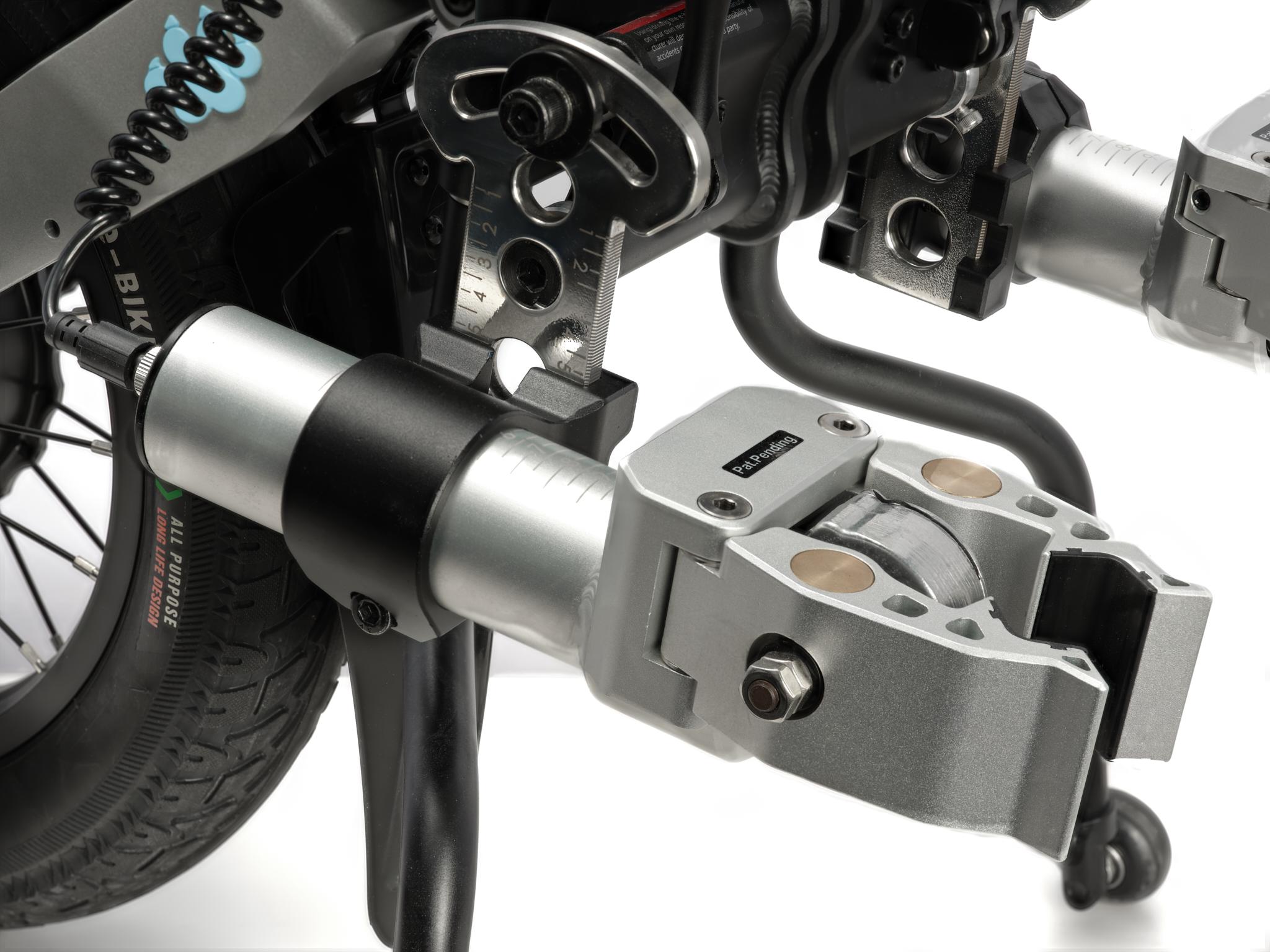
Manual clamping mechanism
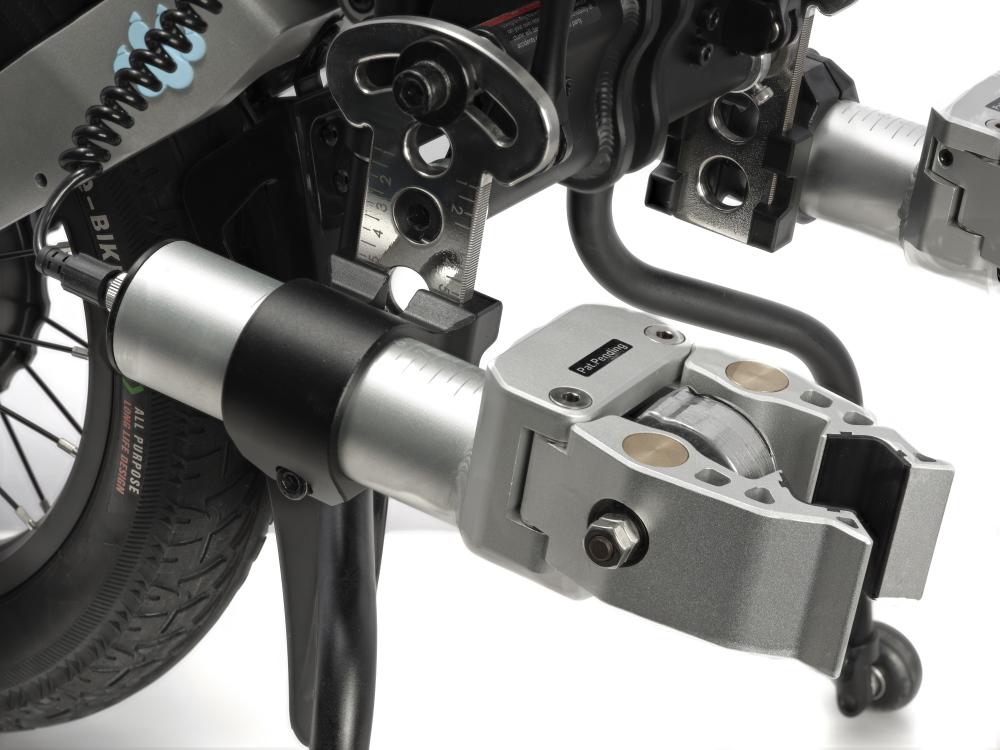
Manual clamp lever and jaws
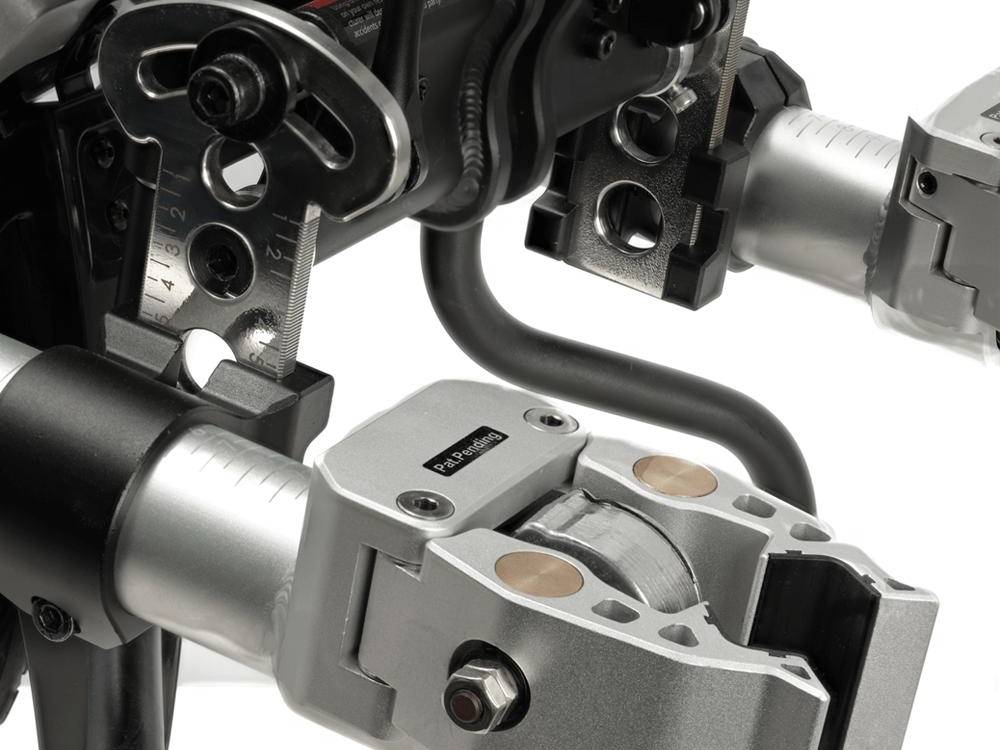
Manual clamp assembly and adjustment
The manual clamping system uses mechanical levers to secure the wheelchair to the PAWS attachment.
During docking, the user positions the wheelchair between the clamp jaws before operating the lever.
Once the wheelchair is correctly positioned, the user closes the clamps around its front frame tubes.
This creates the mechanical connection needed to secure the wheelchair to the power attachment.
Additionally, the user operates the manual lifting mechanism if the selected configuration includes manual lifting.
However, configurations with automatic lifting follow a different operating procedure.
How the manual system operates
The general docking process involves:
1. Positioning the PAWS attachment securely on its supporting legs.
2. Rolling the wheelchair forwards until its front frame tubes sit correctly inside the clamp jaws.
3. Closing the clamps using the manual levers.
4. Operating the manual lift lever to raise the attachment into its driving position, if fitted.
5. Checking that the connection is secure before travelling.
The clamps must be correctly adjusted to the wheelchair before use. This is not simply a matter of closing the levers as tightly as possible.
Rehasense specifies that the clamp adjustment must provide a secure connection while remaining manageable for the user.
Advantages of manual clamping
Mechanical operation: The user operates the clamps using physical levers rather than electrical controls.
Direct control: The clamping process is managed manually by the user.
No electrically operated clamp mechanism: Unlike E-Clamps, the manual clamping action does not rely on an electric motor.
Individual configuration: Manual clamping can also be combined with automatic lifting, depending on the selected PAWS configuration.
Things to consider
Therefore, users who experience difficulty operating physical levers may prefer to consider automatic clamping.
Before choosing, try the mechanism during a demonstration.
This will help establish whether the clamp operation is comfortable and manageable for everyday use.
Rehasense PAWS Automatic Clamping: How Does It Work?
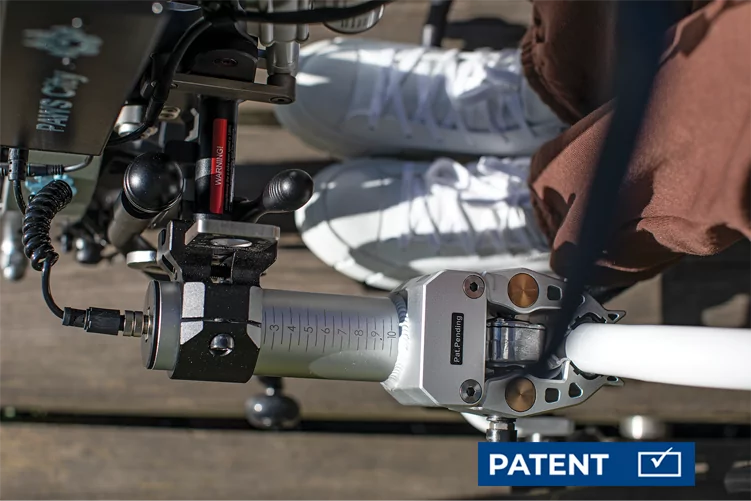
Rehasense PAWS automatic clamping mechanism
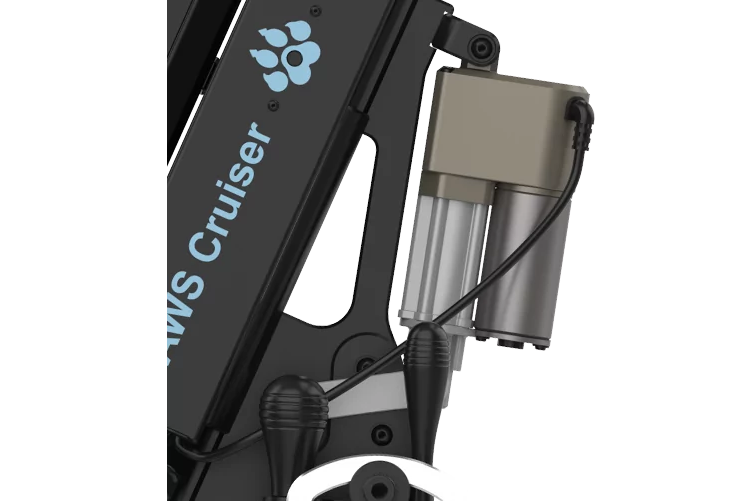
Automatic lifting mechanism
The automatic clamping system, also known as the E-Clamp system, uses electrically operated clamp mechanisms.
nstead of manually closing the clamp jaws with physical levers, the user operates a switch mounted on the PAWS handlebar.
Once the wheelchair is correctly positioned, the electrical system closes the clamp jaws around the wheelchair’s front frame tubes.
This reduces the physical effort needed to operate the clamps.
How the automatic system operates
The general docking process involves:
1. Positioning the PAWS attachment on its supporting legs.
2. Rolling the wheelchair into the correct position between the clamp jaws.
3. Switching on the PAWS system.
4. Operating the Auto Clamp/Lift switch to close the clamps.
5. Using the automatic lifting function if the selected configuration includes it.
6. Checking the completed connection before travelling.
The exact operating sequence depends on the selected docking configuration.
For an automatic clamp and automatic lift configuration, the system can perform the lifting sequence following clamping.
Rehasense’s user manual describes an automatic sequence with a delay after clamping before lifting begins.
Advantages of automatic clamping
Reduced physical effort: The clamps close and release electrically.
Convenient handlebar controls: The user operates the mechanism using a switch rather than individual clamp levers.
Useful for reduced hand strength: The system can help users who find manual clamp operation difficult.
Integration with automatic lifting: When supplied with automatic lift, docking and lifting can be controlled through the same system.
Things to consider
The mechanism also has an electrical operating sequence that users need to understand.
It does not remove the need for correct wheelchair positioning, suitable frame compatibility or professional adjustment.
The automatic version may be more appropriate for someone who struggles with manual clamping, but suitability must be assessed individually.
Manual vs Automatic Clamping: Key Differences
The following table summarises the main differences between the two systems.
| Feature | Manual Clamping | Automatic Clamping |
|---|---|---|
| Clamping operation | Physical lever | Electrical switch |
| Closing the jaws | Manually operated | Electrically operated |
| Releasing the clamps | Manual operation | Electrical control |
| Physical effort | Requires manual force | Reduced clamping effort |
| Power requirement for clamping | Mechanical operation | Requires powered electrical system |
| User interaction | Operates clamp levers | Uses handlebar controls |
| Lifting | Depends on selected lift configuration | Can be paired with automatic lift |
| Main consideration | Hand strength and coordination | Electrical operation and controls |
Does Automatic Clamping Also Mean Automatic Lifting?
Clamping and lifting are two separate functions. Rehasense offers different combinations to accommodate individual requirements.
According to the manufacturer’s user manual, the configurations include:
| Configuration | Clamping | Lifting |
|---|---|---|
| Manual Clamp / Manual Lift | Manual | Manual |
| Manual Clamp / Auto Lift | Manual | Automatic |
| Auto Clamp / Auto Lift | Automatic | Automatic |
However, the manufacturer’s manual identifies the three configurations above as its standard docking options. Availability should be confirmed for the particular PAWS model and market.
This configuration requires the user to operate both the clamp mechanism and the lifting mechanism manually.
It may suit someone who has sufficient strength and coordination to manage both operations.
Manual Clamp with Automatic Lift
This hybrid arrangement keeps the mechanical clamping system but adds powered lifting.
It may be worth considering when the user can operate the clamp levers comfortably but would prefer assistance when moving the PAWS into its driving position.
Automatic Clamp with Automatic Lift
This configuration provides electrically operated clamping and lifting.
The user operates the relevant handlebar switch rather than manually closing the clamps and operating the lift mechanism.
It may be particularly useful for users who need assistance with both stages of docking.
Which Rehasense PAWS Clamping System Is Better for You?
There is no single answer that suits every wheelchair user.
The right configuration depends on your hand strength, coordination, ability to operate controls and the wheelchair being used.
Consider the following practical situations.
Manual clamping may be worth considering if:
⇒ You can comfortably operate mechanical clamp levers.
⇒ You have sufficient hand strength and coordination.
⇒ You prefer direct mechanical operation.
⇒ You are comfortable operating the manual lifting mechanism, if selected.
Automatic clamping may be worth considering if:
⇒ You find physical clamp levers difficult to operate.
⇒ You have reduced hand strength.
⇒ You prefer electrically operated docking.
⇒ You would benefit from automatic clamping and lifting together.
Consider a hybrid configuration if:
You can manage manual clamping but would benefit from automatic lifting.
This option is particularly important because choosing fully automatic docking may not be necessary if only one part of the process presents a difficulty.
Our advice: Test both arrangements with your own wheelchair wherever possible. A demonstration can help establish whether the controls, clamp operation and lifting process are comfortable and manageable.
Does the Clamping System Fit Every Manual Wheelchair?
Not necessarily.
Although Rehasense PAWS has an adjustable clamping system, compatibility must be checked against the wheelchair’s frame design and construction.
The clamps connect to the wheelchair’s front frame tubes. Their position, angle, depth and width must be correctly adjusted.
The manufacturer’s documentation highlights several important considerations:
⇒ The wheelchair must have suitable frame tubes for clamping.
⇒ The clamp jaws must make an appropriate connection with the frame.
⇒ The clamp mechanism must be adjusted symmetrically.
⇒ The wheelchair frame must be suitable for the forces generated during powered operation.
⇒ Compatibility should be assessed by an authorised PAWS supplier.
Frame material is particularly important. Rehasense’s user manual warns about the suitability of composite-fibre frames and directs users to consult an authorised supplier about interface options.
Do not assume that a wheelchair is compatible simply because its frame tubes appear to fit inside the clamp jaws.
What Should You Check Before Choosing?
Before deciding between manual and automatic clamping, consider these practical questions.
⇒ Hand strength: Can you comfortably operate the manual clamp levers?
⇒ Coordination: Can you position and secure the wheelchair consistently?
⇒ Lifting requirements: Do you need manual or automatic lifting?
⇒ Wheelchair compatibility: Has your wheelchair frame been assessed for PAWS?
⇒ Control accessibility: Can you comfortably reach and operate the handlebar controls?
⇒ Demonstration: Have you tried the complete docking and undocking process?
It is also worth considering whether your physical abilities vary throughout the day. A system that feels manageable during a short demonstration may feel different after repeated use.
An authorised supplier can assess your requirements and help identify the most appropriate configuration.
Final Thoughts: Choosing the Right PAWS Docking System
The main difference between Rehasense PAWS manual and automatic clamping is how the wheelchair is secured to the power attachment.
Manual clamping uses physical levers, while automatic clamping uses electrically operated controls.
Both systems have their place. The important consideration is choosing a configuration that matches your physical abilities, wheelchair compatibility and everyday requirements.
Remember that lifting is a separate function. A hybrid configuration may provide a useful middle ground if you can manage manual clamping but need assistance with lifting.
Before making a decision, arrange a demonstration and discuss your requirements with an authorised PAWS supplier.
WHEELCHAIR ROADSHOW UK
Want to try one for yourself?
Come along to a future Wheelchair Roadshow UK event to explore wheelchair power attachments and mobility equipment in person. Prefer to speak to someone sooner? You can request a free demonstration, subject to availability.
This button will be activated once the demonstration form is available.